
01 · Overview
Product context and engineering scope.
The goals, operating context, and technical decisions behind this case study.
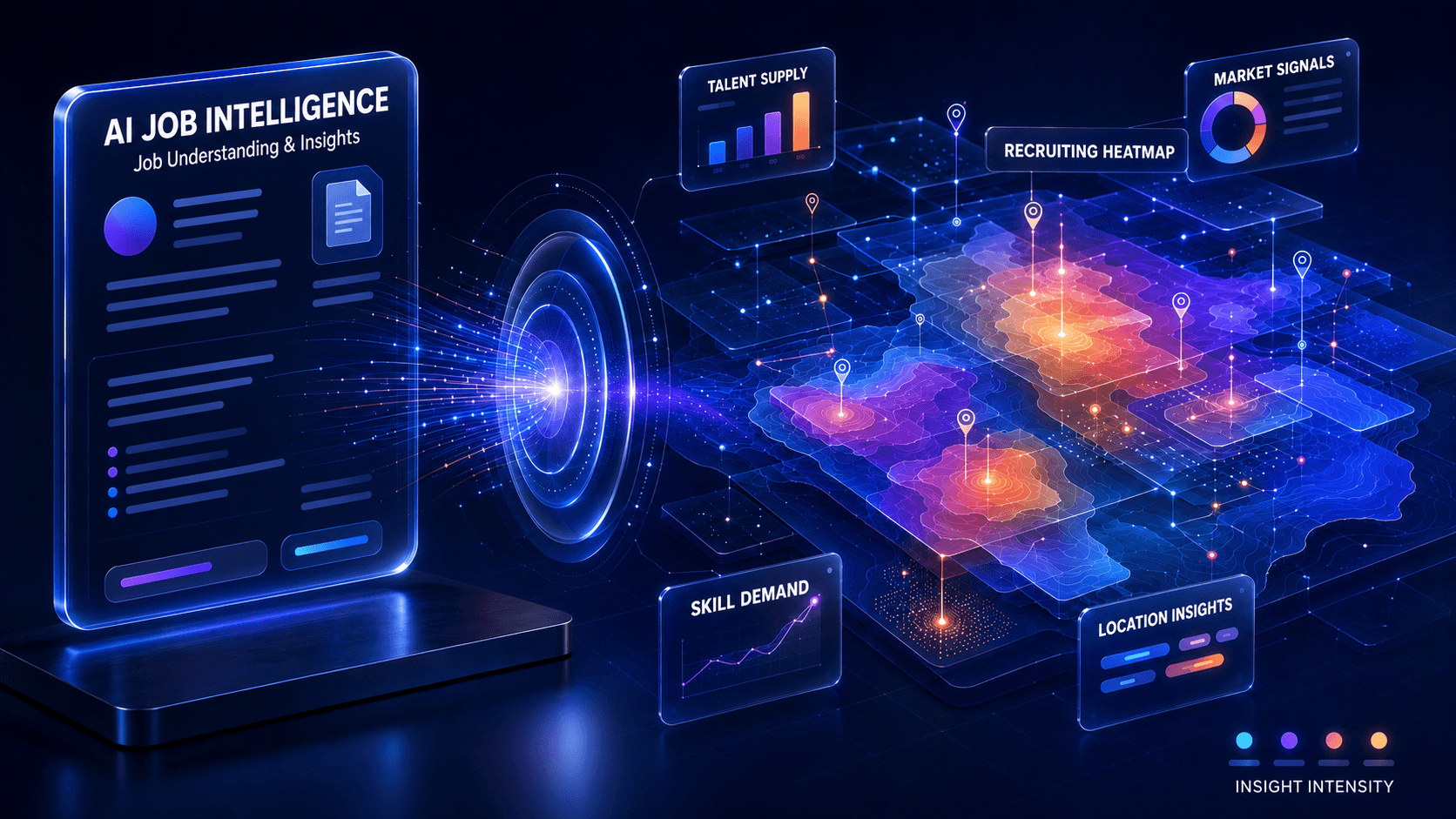
AI Job Intelligence helps recruiters understand the overall hiring context of a job without manually reviewing and organizing every detail in the job description.
Built for GiFTEM — Shuvel Digitech
01
The feature converts the selected job into clear, recruiter-friendly intelligence that supports candidate sourcing and hiring preparation.
02
An integrated recruiting heatmap presents important insights visually, helping recruiters explore the hiring landscape through an accessible and interactive experience.
02 · Key Contributions
What I engineered across the product.
Every original contribution preserved in sequential chapters, highlighting technical execution.
As AI Engineer / Full Stack AI Engineer at GiFTEM — Shuvel Digitech, I engineered core capabilities across the product.
3 engineering deliverables
01
Designed and implemented the end-to-end AI Job Intelligence experience across the frontend, backend, AI services, data persistence, and background-processing workflows.
02
Developed an AI-powered workflow that converts job descriptions into structured, recruiter-friendly intelligence.
03
Built the Recruiting Heatmap experience to present job-related hiring insights through clear and interactive visualizations.
3 engineering deliverables
04
Implemented asynchronous processing so intelligence generation can run reliably without blocking the recruiter interface.
05
Created processing, completion, failure, and regeneration experiences for long-running AI operations.
06
Integrated Job Intelligence and Recruiting Heatmap views into the GiFTEM job workspace for a unified recruiter experience.
03 · Capabilities
Capabilities designed around real user needs.
The product features and system behaviors delivered by this project.
01
AI-Powered Job Understanding
Understands the overall context of a selected job and converts it into recruiter-friendly intelligence.
02
Recruiter-Ready Insights
Presents complex job information in a clear format designed for practical recruiting workflows.
03
Interactive Recruiting Heatmap
Visualizes important hiring insights through an accessible and interactive heatmap experience.
04
Automated Intelligence Generation
Generates job intelligence automatically after a job enters the recruiting workflow.
05
Progressive Processing Experience
Provides clear visual feedback while job intelligence and heatmap insights are being prepared.
06
Insight Regeneration
Allows recruiting insights to be refreshed when the underlying job context changes.
04 · System flow
How the system moves from input to outcome.
A stage-based connected process visualization preserving every workflow step.
Stage 01
Recruiter creates or selects a job
Stage 02
AI prepares the job intelligence
Stage 03
Recruiter-friendly insights become available
Stage 04
The recruiting heatmap presents visual hiring context
Stage 05
Recruiter explores the insights for sourcing preparation
Stage 06
Intelligence can be refreshed when the job changes
05 · Decisions
Constraints translated into engineering decisions.
The problems that shaped the product and the responses used to address them.
01
The constraint
Recruiters must interpret lengthy and inconsistent job descriptions before beginning candidate sourcing.
Engineering decision
Developed an AI-powered experience that converts each job into clear and usable recruiting intelligence.
02
The constraint
Presenting a large amount of job-related information without overwhelming recruiters required a carefully structured experience.
Engineering decision
Combined concise intelligence sections with an interactive heatmap to make the information easier to understand and explore.
03
The constraint
AI generation can take time and may be affected by temporary processing failures.
Engineering decision
Implemented reliable background processing with progress states, retry handling, failure recovery, and regeneration support.
04
The constraint
Recruiters needed job intelligence to remain accessible alongside their existing sourcing workflow.
Engineering decision
Integrated the feature directly into the GiFTEM job workspace through dedicated intelligence and heatmap views.
06 · Technology
Technology and tools
The complete technology stack utilized in this project, organized by engineering area.
Frontend
Next.js
React
TypeScript
Material UI
Interactive Visualization
Backend
Node.js
Express.js
REST APIs
Background Services
AI & Data
OpenAI API
Structured AI Outputs
PostgreSQL
Sequelize
Processing & Infrastructure
Redis
Bull Queues
Background Workers
AWS
More selected work
Continue exploring the portfolio case studies.